Fields, paddocks and growing areas
Rural Fencing in Sudbury and Surrounding Villages
Rural fencing around Sudbury for livestock containment, land boundaries and wildlife exclusion.
Services for your boundary
Rural Fencing Options
Livestock Enclosures and Land Boundaries.
Livestock Enclosures
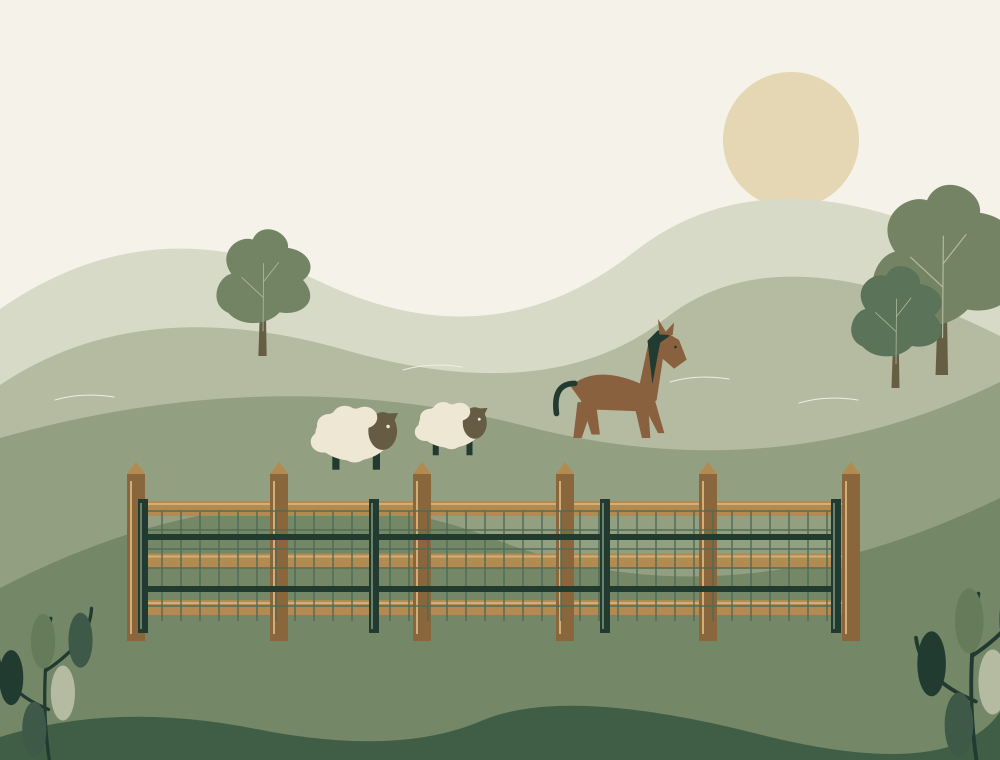
Livestock fencing around Sudbury for animal enclosures, with the fence specification matched to species, size and behaviour.
View livestock enclosures
Land Boundaries
Rural boundary fencing around Sudbury for marking land edges and excluding wildlife.
View land boundariesLivestock Containment and Wildlife Exclusion
Livestock fencing keeps farm animals within an enclosure; wildlife fencing protects land or planting from animals entering. An open post-and-rail boundary may mark the land clearly without achieving either form of containment on its own. Mesh, ground gaps, height and gates need to match the animals involved. Where the boundary has more than one purpose, the complete arrangement must address each one.
Rural Fence Types and Their Uses
Post-and-rail gives an open rural boundary and can form part of an animal-specific enclosure. Stock fencing uses suitable netting, supports and strainers for agricultural livestock. Horse paddocks need separate attention to visibility, openings and injury risks. Deer fencing addresses a taller exclusion boundary, while rabbit fencing requires suitable mesh and ground-level protection. These differences explain why one standard rural specification cannot serve every purpose.
Farm Gates and Machinery Access
Farm gates need enough clear width and approach space for regular machinery, while their infill and ground gaps must suit any livestock using the field. A large opening can still be difficult to use if a trailer cannot turn into it or the leaf catches rising ground. Gate positions, hanging posts and connections to the fixed fence should therefore be planned with the enclosure.
Slopes, Vegetation and Existing Boundaries
Slopes and hollows can create gaps under rural fencing, while corners change the support and tensioning arrangement. Vegetation can obstruct installation and conceal later damage. Existing posts should only be retained if their condition and layout suit the new system. Watercourse interfaces and other sensitive features need site-specific review; a standard straight-run detail should not be extended across them without assessment.
Request a Rural Fencing Quote
A plan with approximate lengths, corners and entrances is useful. Include the animals involved and the problem with the current boundary, if there is one. This helps develop a coherent proposal instead of a collection of disconnected fencing lengths.
Useful to know
Rural Fencing FAQs
Should the fence be chosen around the animals or the land?
Both. Include seasonal changes in livestock and ground access, not just the animals present on the survey day, so the enclosure reflects its intended year-round use.
Can one boundary serve more than one purpose?
Yes, if the complete design meets each need. State combined requirements explicitly, such as containing livestock while excluding rabbits, so none is assumed from the fence's appearance.
What land information is useful before an assessment?
Provide a plan marking lengths, gates, corners and difficult ground. Distinguish the proposed route from the existing fence where they differ.
Related services
Related Fencing Services
Farm Gates
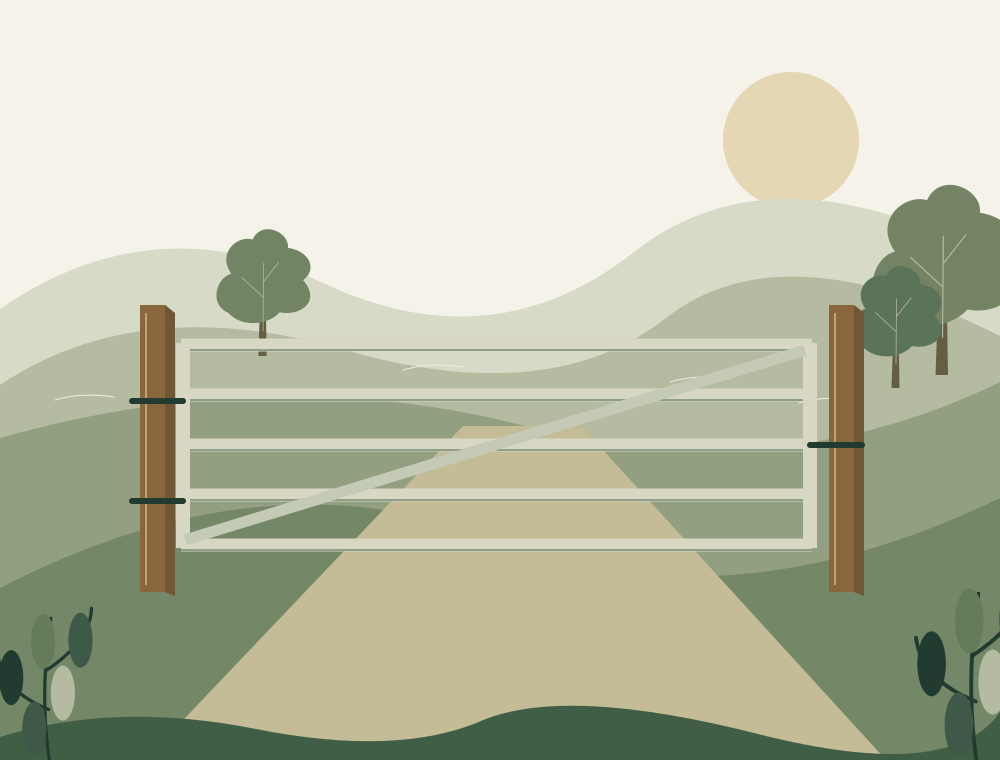
Farm gates around Sudbury for machinery access, livestock movements and daily handling.
View farm gates
Garden Fencing
Garden fencing in Sudbury for privacy, decorative boundaries and practical outdoor spaces.
View garden fencing
Fence Repairs & Replacement
Fence repairs and replacement in Sudbury for damaged panels, failing posts and worn-out boundaries.
View fence repairs and replacement